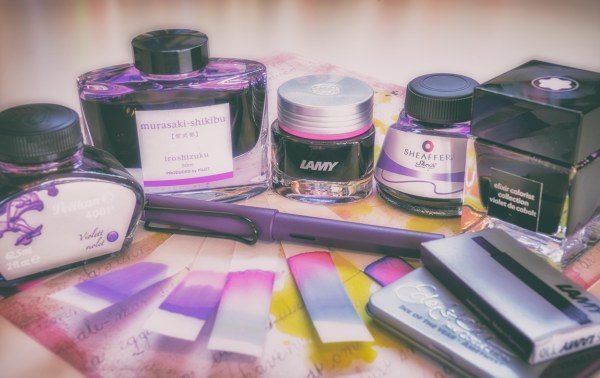
How quick a pen goes dry? Loss of Ink Over Time – Results on Common, Popular Pens (and also non inserted cartridges and converters).

It sometimes happens that you don't use fountain pens for a long time or you replace cartridges before they are emptied and think you can use the remaining ink again later (at least you think so, but you rarely do it, and if you do, you should do it quickly, as the test shows). My curiosity was piqued again and I thought it could be fun to measure how quickly ink in fountain pens (or cartridges and converters lying around) dries out.

Black isn’t that Black …

Today, I would like to introduce a few black inks. The following inks were tested: J. Herbin Perle Noire Montblanc Black (from 2019) and Mystery Black (2020) Pelikan 4001 Brilliant Black Cleo Black Cross Black General ApproachThis primarily describes the writing properties and appearance on paper, including aspects like shading and ink absorption on the... Continue Reading →

Mic comparison Microtech Gefell M930 und Microtech Gefell MT 71 S (English translation)

This is not a review, more a comparison. Just listen to the audio samples (German). I have left the recordings completely raw (except for the conversion to the mp3 format, which is unavoidable due to the sheer size of 16-bit WAV files). I am using the MOTU M2 audio interface, and I have set the gain on the MOTU M2 to about 1 o'clock position. I tried to maintain a distance of 15cm for both mics. However, I also tried the close-miking technique, where the distance was about 5cm. A pop filter was also used.

Vergleich der Mikrofone Microtech Gefell M930 und Microtech Gefell MT 71 S

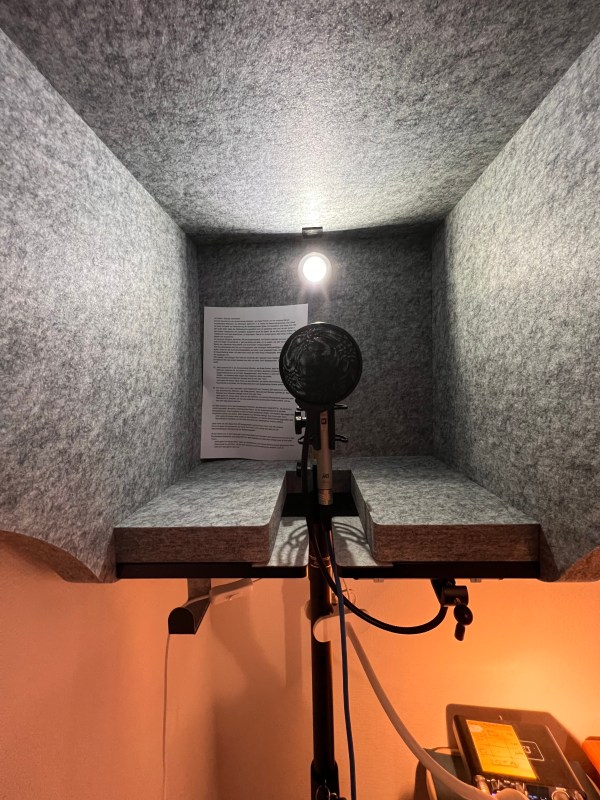
Heute möchte ich zwei Mikrofone vorstellen, die von der Fima Microtech Gefell hergestellt werden. Nur zur Info, ich bin nicht verwandt oder verschwägert mit Angestellten der Firma oder den Besitzern. Zur Geschichte der Firma möchte ich auch nicht so viel erzählen, das kann man alles im Internet herausfinden: https://www.microtechgefell.de/ Dies hier ist kein Test, noch weniger ein Vergleichstest, sondern lediglich ein … Vergleich! Hört Euch einfach nur die Hörbeispiele an. Ich habe die Aufnahmen komplett roh belassen (abgesehen von der Konvertierung in das mp3-Format, was unumgänglich ist aufgrund der schieren Größe von 16-Bit-WAV-Dateien). Als Audio-Interface dient mir das MOTU M2, den Gain habe ich am MOTU M2 auf circa 1-Uhr-Stellung gestellt. Ich habe mich bemüht, bei beiden Mics eine Distanz von 15cm einzuhalten. Aber ich habe auch den Nahbesprechungseffekt ausprobiert – dann war die Distanz etwa 5cm. Ein Pop-Filter fand ebenfalls Verwendung. Um Raumhall und Umgebungsgeräusche zu minimieren, habe ich eine Vocal Head Booth verwendet

Die t.akustik Vocal Head Booth – ausprobiert mit dem Microtech Gefell MT 71 S und dem Røde Podmic

Die t.akustik Vocal Head Booth – ausprobiert mit dem Microtech Gefell MT 71 S und dem Røde Podmic. Mir ging es nur darum herauszufinden, ob die Kabine den verhassten Raumhall zu reduzieren im Stande ist. Um zu vergleichen habe ich einmal mit der Headbooth und einmal ohne die Headbooth aufgenommen. Also einmal mit Raumhall und einmal mit gedämpften Raumhall. Ich habe ein wirklich gutes Kondensatormikrofon verwendet und ein sehr gängiges, günstiges dynamisches Mikrofon, dass für das Podcasting optimiert wurde. Ich benutze als Audiointerface das Motu M2 und keine Vorverstärkung irgendeiner Art.

Website Built with WordPress.com.

Up ↑